Source Laser Engraved Bar Strainer for Cafes, Bars, and Restaurants
Explore 30 options for laser engraved bar strainer from verified suppliers in China. Compare stainless steel models with FDA and CE certifications, custom colors, and OEM capabilities for commercial beverage service.
Key considerations
Products List


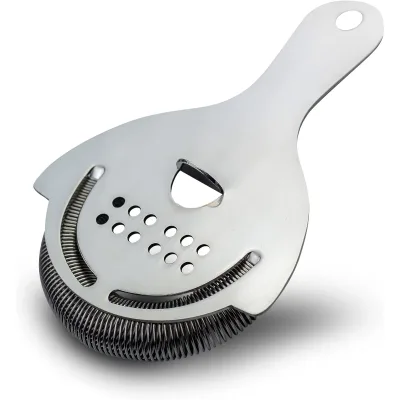
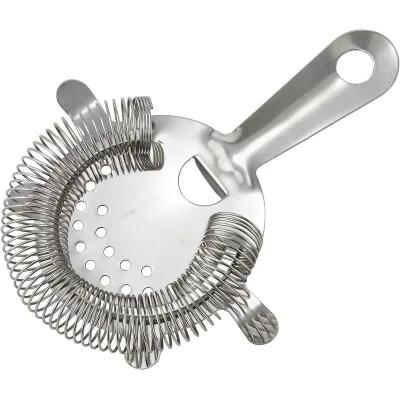
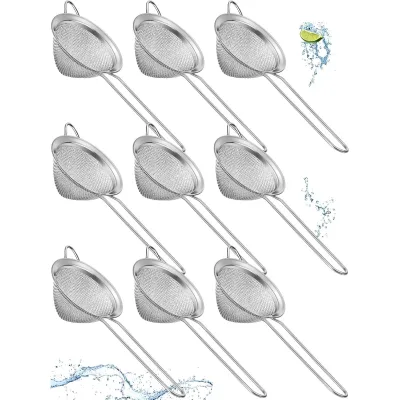


Comprehensive Sourcing Guide
Strategic Sourcing Guide for Laser Engraved Bar Strainers
The global market for specialized kitchen and beverage equipment continues to evolve, with a distinct segment focusing on high-durability filtration solutions. Among these, the laser engraved bar strainer represents a convergence of functional engineering and aesthetic customization. For procurement professionals and business buyers, sourcing this specific item requires a nuanced understanding of material science, manufacturing capabilities, and regulatory compliance. This guide synthesizes observed market data and technical attributes to provide a disciplined framework for evaluating potential suppliers and defining product requirements. The focus remains strictly on verifiable facts regarding materials, certifications, and production parameters available in current listings.
Technical Specifications and Material Composition
The foundational element of any bar strainer is its material composition, which dictates longevity, corrosion resistance, and suitability for food contact. Analysis of available product data indicates a primary reliance on metal, with specific listings highlighting stainless steel as a preferred variant. This material choice is critical for bar environments where exposure to acidic beverages, constant moisture, and frequent cleaning cycles is the norm. The observed weight variations across different models, ranging from 35g to 71g, suggest that the strainer's density and thickness are not uniform across the market. Buyers must verify the specific gram weight for their intended application, as lighter units may offer portability while heavier units likely provide superior structural integrity.
Dimensional specifications vary significantly depending on the model. Data points reveal a wide spectrum of sizes, including specific measurements such as 6"L x 4.63"W x 0.88"H, 11.59cm, 14.59.3cm, 1019cm, 920cm, and 9.6*16.5cm. Furthermore, some listings reference standard models like "14" or "1" alongside custom codes such as "CS008" and "BS006." This diversity implies that a "one-size-fits-all" approach is ineffective. Procurement teams must match the strainer's physical dimensions to the specific vessel or filtration system it will serve. The filtering level is another critical technical parameter; while some products are described as having a "Medical Grade" filtering level, others are categorized simply as "Common" flow. This distinction is vital for applications requiring high-purity filtration versus general bar use.
Customization and Branding Capabilities
A defining characteristic of the modern bar strainer market is the emphasis on customization. The product attributes explicitly confirm that customization is available, with options extending to color and branding. While standard offerings include Silver Color and Gold Color, the market also supports Custom color requests. This flexibility allows brands to align their equipment with specific interior design themes or corporate identity guidelines.
The most significant customization feature observed is the laser engraving capability. This process allows for the permanent application of logos, brand names, or unique identifiers directly onto the metal surface. Unlike adhesive labels or printed coatings, laser engraving ensures the branding remains legible despite repeated exposure to water, alcohol, and abrasive cleaning agents. The production process for these customized items involves a sample time of approximately 7 days, followed by a production time of 30 days. Buyers should note that the sample cost for stock items is listed at $20, which serves as a baseline for initial quality verification before committing to a larger order. The ability to customize packaging is also noted, with options ranging from individual inner boxes to complex configurations involving OPP bags, white boxes, and cartons.
Compliance, Certification, and Regulatory Standards
Navigating the regulatory landscape is a non-negotiable aspect of sourcing food-contact equipment. The observed product data presents a mix of certifications, indicating that compliance is not uniform across all suppliers. Some listings explicitly state compliance with FDA standards, which is a primary requirement for products entering the United States market. Other listings reference a broader suite of international certifications, including CE / EU, CIQ, EEC, and LFGB. The presence of LFGB (German Food and Feed Code) is particularly notable, as it often implies a higher standard of safety for food contact materials than the baseline CE mark alone.
However, buyers must exercise caution when interpreting certification claims. The data indicates that different models may carry different certification statuses. For instance, while one model might be FDA certified, another might only list CE. It is the responsibility of the procurement team to verify that the specific model ordered holds the necessary certifications for the target export market. The standard "We have different size" or "Different model" notes in the product descriptions suggest that compliance is tied to specific SKUs rather than the entire product line. Therefore, requesting a valid certificate of compliance for the exact model number (e.g., GLY11f-7 or Daily use-6026D) is essential before finalizing any purchase agreement.
Cost Drivers and Pricing Structures
Understanding the cost structure of laser engraved bar strainers requires an analysis of the observed price range and minimum order quantities (MOQ). The market data indicates a listed price range of $0.2 to $10 USD per unit. This wide variance is likely driven by factors such as material grade (stainless steel vs. other metals), the complexity of the laser engraving, and the specific dimensions of the strainer. The lower end of the spectrum likely corresponds to standard, non-customized units with minimal branding, while the higher end reflects custom-colored, heavily engraved, or larger models.
The Minimum Order Quantity (MOQ) also fluctuates significantly, with observed ranges from 1 unit up to 5,000 units. This flexibility suggests that the market caters to both small boutique buyers and large-scale distributors. However, the cost per unit is rarely static; it is heavily influenced by the volume ordered. Buyers should anticipate that unit costs will decrease as the order volume approaches the higher end of the MOQ spectrum. Payment terms are standardized across many listings, typically requiring 30% in advance with the balance due before shipping. This structure protects the supplier's investment in raw materials and labor while ensuring the buyer has leverage until the goods are ready for transit.
Supplier Evaluation and Geographic Considerations
Geographic origin plays a pivotal role in the logistics and quality assurance of bar strainers. The data consistently points to Zhejiang, China, and the broader region of Zhejiang Province, China, as the primary place of origin. This region is a known manufacturing hub for metalworking and kitchenware, offering a mature supply chain for stainless steel products. The presence of multiple model codes originating from this location suggests a high concentration of specialized manufacturers.
When evaluating suppliers, buyers should look beyond the origin and focus on the specific attributes of the manufacturing facility. Key indicators of a reliable supplier include the ability to provide detailed product specifications, clear communication regarding sample times (7 days) and production lead times (30 days), and a transparent payment structure. The availability of OEM (Original Equipment Manufacturer) services is another strong indicator of a supplier's capability to handle custom orders. A supplier that offers "Customized" packing and "Customized" standards demonstrates a higher level of flexibility and responsiveness to buyer needs. Buyers should verify the supplier's capacity to handle the specific installation requirements, such as "External Installation," which may dictate the strainer's mounting hardware and design.
Quality Control and Long-Term Procurement
Ensuring long-term value requires a robust quality control (QC) strategy. The observed product attributes highlight features such as "Backwash" capability and "Common" flow, which are functional metrics that must be tested. For strainers with a "Medical Grade" filtering level, the QC process must be rigorous, potentially involving third-party testing to verify pore size and filtration efficiency. The "Laser Engraved" logo must also be inspected for depth and clarity to ensure it does not compromise the structural integrity of the metal or peel off over time.
Packaging is a critical component of quality control, as it protects the product during transit. The variety of packaging options, from "Each Inner Box" to "OPP Bag+White Box+Carton," suggests that the supplier can tailor protection to the fragility of the item. For high-value custom orders, the "Each Inner Box" option is likely the preferred choice to prevent scratching of the laser engraving. Buyers should establish clear acceptance criteria based on weight (e.g., 48g vs. 71g) and dimensions to ensure the received goods match the ordered specifications.
Long-term procurement considerations also involve the stability of the supply chain. Given the 30-day production time, buyers must factor this lead time into their inventory planning. The ability to order samples with a 7-day turnaround allows for iterative testing and refinement of the product before scaling up. By maintaining a relationship with a supplier that offers flexible payment terms and clear production timelines, buyers can mitigate the risks associated with supply chain disruptions.
Comparative Analysis of Product Attributes
To assist in the decision-making process, the following table summarizes the key attributes observed in the market for laser engraved bar strainers. This comparison highlights the variability in specifications that buyers must navigate.
| Attribute Category | Observed Variations | Key Verification Points |
|---|---|---|
| Material | Metal, Stainless Steel | Verify food-grade certification for the specific alloy. |
| Weight | 35g, 48g, 71g | Confirm weight matches the specific model number ordered. |
| Dimensions | 6"L x 4.63"W x 0.88"H to 14.5*9.3cm | Measure against the intended vessel or filter housing. |
| Certification | FDA, CE / EU, CIQ, EEC, LFGB | Request valid certificates for the specific SKU. |
| Customization | Color (Silver, Gold, Custom), Logo (Laser) | Confirm sample approval for engraving depth and color. |
| Lead Time | Sample: 7 days, Production: 30 days | Align with inventory replenishment schedules. |
| Packaging | Inner Box, OPP Bag, Customized | Select packaging that prevents damage during shipping. |
| Origin | Zhejiang, China | Verify factory audit reports if required by corporate policy. |
Final Procurement Recommendations
Sourcing laser engraved bar strainers is a process that demands attention to detail regarding material standards, certification validity, and customization capabilities. The market offers a wide array of options, from basic metal strainers to high-grade, medical-level filtration units with bespoke branding. Buyers must approach this procurement with a clear definition of their technical requirements, specifically regarding weight, dimensions, and filtration levels. The variability in certifications and model numbers necessitates a rigorous verification process where the specific product data is cross-referenced with the supplier's documentation.
By leveraging the observed data on production times, payment terms, and packaging options, buyers can construct a procurement strategy that balances cost efficiency with quality assurance. The focus should remain on verifying the actual product attributes rather than relying on general market assumptions. Whether the requirement is for a standard 48g unit or a custom 71g medical-grade strainer, the path to a successful procurement lies in detailed specification matching and clear communication with the supplier. This disciplined approach ensures that the final product meets the functional and aesthetic demands of the bar or industrial environment in which it will operate.
FAQs
What certifications are available for laser engraved bar strainers?
Available certifications include FDA, CE, EU, CIQ, EEC, and LFGB depending on the specific model. Buyers must verify the exact certificate for the ordered SKU, as compliance varies across different product codes and sizes.
How long does production take for custom laser engraved strainers?
Production typically requires 30 days after sample approval, with a 7-day sample time for stock items. This timeline applies to customized orders involving specific logos, colors, or packaging configurations requested by the buyer.
Can I customize the color and logo on the strainer?
Yes, customization is available for colors like silver, gold, or custom requests, along with laser engraved logos. The branding is permanently etched into the metal to ensure durability against water and cleaning agents.
What are the typical weight and material specifications?
Strainers are made of metal or stainless steel with weights ranging from 35g to 71g across different models. Specific dimensions vary significantly, so buyers should confirm the exact gram weight and size for their intended application.
What is the minimum order quantity for these strainers?
The minimum order quantity ranges from 1 to 5000 units depending on the supplier and customization level. Lower MOQs suit small buyers, while larger volumes often secure better pricing and standard shipping terms.
Where are these metal strainers manufactured?
The primary place of origin is Zhejiang, China, a known hub for metalworking and kitchenware manufacturing. Buyers should verify the specific factory location and audit reports to ensure quality standards are met for their region.
How is the product packaged for shipping?
Packaging options include inner boxes, OPP bags with white boxes, or fully customized carton configurations. The choice depends on the order value and the need to protect the laser engraving during transit.